Advisory Board

Christian Bird
Christian Bird is a Principal Researcher at Microsoft Research working on Empirical Software Engineering as part of the Research in Software Engineering (RiSE) group. He received his bachelor’s degree in CS from Brigham Young University and Ph.D. in Computer Science from UC Davis, studying empirical software engineering under Prem Devanbu. His current work examines the use of data to guide decisions of stakeholders in large software projects.

Gari Clifford
Gari Clifford is the Chair of Biomedical Informatics at Emory, a professor of Biomedical Engineering at Georgia Tech, and a Fellow of the IEEE (for contributions to machine learning applications in cardiovascular time series), the AIMBE, and the NAI. He has been developing and applying machine learning in the medical domain for over 25 years, focusing on open science through his leadership of the MIMIC II database and the annual PhysioNet Challenges. His application domains include neuro-psychiatric health, sleep, cardiovascular disease, maternal-fetal health and global health. He co-founded the Co-design Lab and Safe+Natal with his anthropologist partner, Prof. Rachel Hall-Clifford, to develop interventions that leverage edge AI tools for diagnostics in and with remote communities.

Nicole Forsgren
Nicole Forsgren is a Senior Director of Developer Intelligence at Google, leading data science and developer intelligence across Core. She received her Master's in Accounting and Ph.D. in Management Information Systems from the University of Arizona. Her research focuses on measuring software delivery performance, developer experience, and AI-native productivity, and she is the lead investigator on some of the largest DevOps studies to date. She has been an entrepreneur (with an exit to Google), professor, developer, sysadmin, and performance engineer, and her work has been published in several peer-reviewed journals and conferences. She is the co-author of best-selling books including Accelerate (Shingo Publication Award winner), The DevOps Handbook 2e, and the recently released Frictionless.
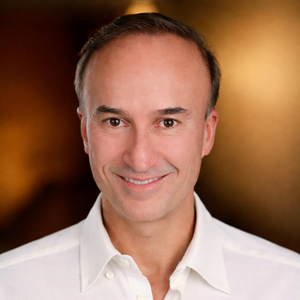
Stephen Freidheim
Stephen C. Freidheim is the chief investment officer, founder, and managing partner of Cyrus Capital Partners, an investment advisory firm with offices in New York and London. Before starting Cyrus in 1999, Freidheim held positions at Bankers Trust and Nomura Securities. He started his career at Kidder, Peabody & Co. Freidheim has served on several corporate boards, including that of the airline Virgin America, which he also cofounded. He chairs the Executive Committee of the Board of the Peterson Institute for International Economics. He serves as Trustee of the U.S. Olympic & Paralympic Foundation and the Advisory Board of Yale’s Tobin Center for Economic Policy. Freidheim received a BA in economics from Yale University.
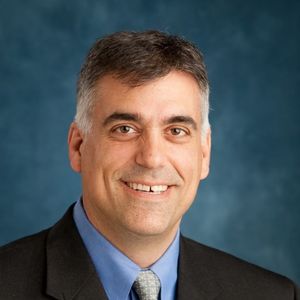
Richard Gonzalez
Richard Gonzalez is the Amos N. Tversky Collegiate Professor of psychology and statistics at the University of Michigan and a research professor at the Institute for Social Research. His research focuses on judgment and decision making broadly construed, with work that spans both normative and descriptive approaches. He uses a range of research methods to understand how people make decisions under uncertainty. Gonzalez’s recent projects extend decision research into applied settings such as product design, consumer choice, extreme weather, and medical decision making, as well as the development of new models that integrate biological and behavioral data. He also conducts research in applied statistics and quantitative methods, treating statistical modeling itself as a form of decision making under constraints. His work aims to build interpretable, theoretically grounded models that advance both methodological practice and substantive understanding of human decision behavior.
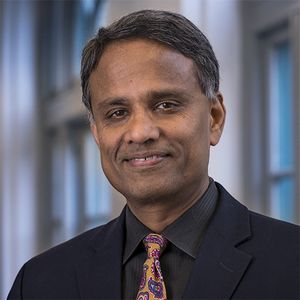
Ramayya Krishnan
Ramayya Krishnan is the W. W. Cooper and Ruth F. Cooper Professor of Management Science and Information Systems at Heinz College and the Department of Engineering and Public Policy at Carnegie Mellon University. A faculty member at CMU since 1988, Krishnan served as the Interim Dean of Heinz College in 2008 and served three terms as the Dean of Heinz College from 2009 -2025. Krishnan was educated at the Indian Institute of Technology and the University of Texas at Austin. He has a bachelor’s degree in mechanical engineering, a master’s degree in industrial engineering and operations research, and a PhD in management science and information systems. He is an expert on digital transformation and has worked extensively with firms and policy makers on using technology and analytics to achieve policy goals. He is an expert on decision and data analytics and has seminal contributions to technology management and policy in AI, e-commerce, and informaton risk management. He has served as Department Editor of Management Science and seved in senior editorial roles in multiple INFORMS and Information engineering journals. His current research interests are in AI measurement and evaluation and in the implications that AI holds for the future of work.

Blake McShane
Blake McShane joined the marketing faculty at the Kellogg School of Management in 2010 as a Donald P. Jacobs Scholar. He has developed and applied statistical methodology to topics ranging from optimizing internet ad-serving algorithms to forecasting home runs in baseball. His specific research interests include hierarchical / multilevel modeling, statistical learning, and generalized Markov models. More generally, he seeks to develop statistical methods to accommodate the rich and varied data structures encountered in business problems and to use these methods to glean insight about individual behavior so as to test and supplement existing theories. Blake earned his PhD and MA in Statistics, MA and BA in Mathematics, and BS in Economics from the University of Pennsylvania.
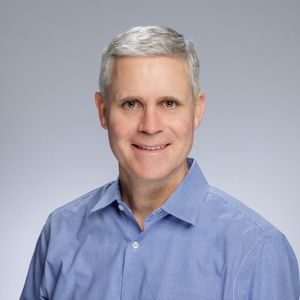
James Sullivan
James Sullivan is a Professor of Economics at the University of Notre Dame and Co-Founder and Director of the Wilson Sheehan Lab for Economic Opportunities (LEO), which is a research center that works with service providers and policymakers to identify effective and scalable solutions to reduce poverty in America. He was recently appointed to the U.S. Commission on Social Impact Partnerships and he serves on the National Poverty Research Center Advisory Board. His research examines the effectiveness of anti-poverty programs at the national, state, and local level. He also studies the consumption, saving, and borrowing behavior of poor households, as well as poverty and inequality measurement. Sullivan teaches intermediate microeconomics and advanced labor economics at the undergraduate level and public economics at the graduate level. He received his bachelor’s degree from the University of Notre Dame and his Ph.D. from Northwestern University.